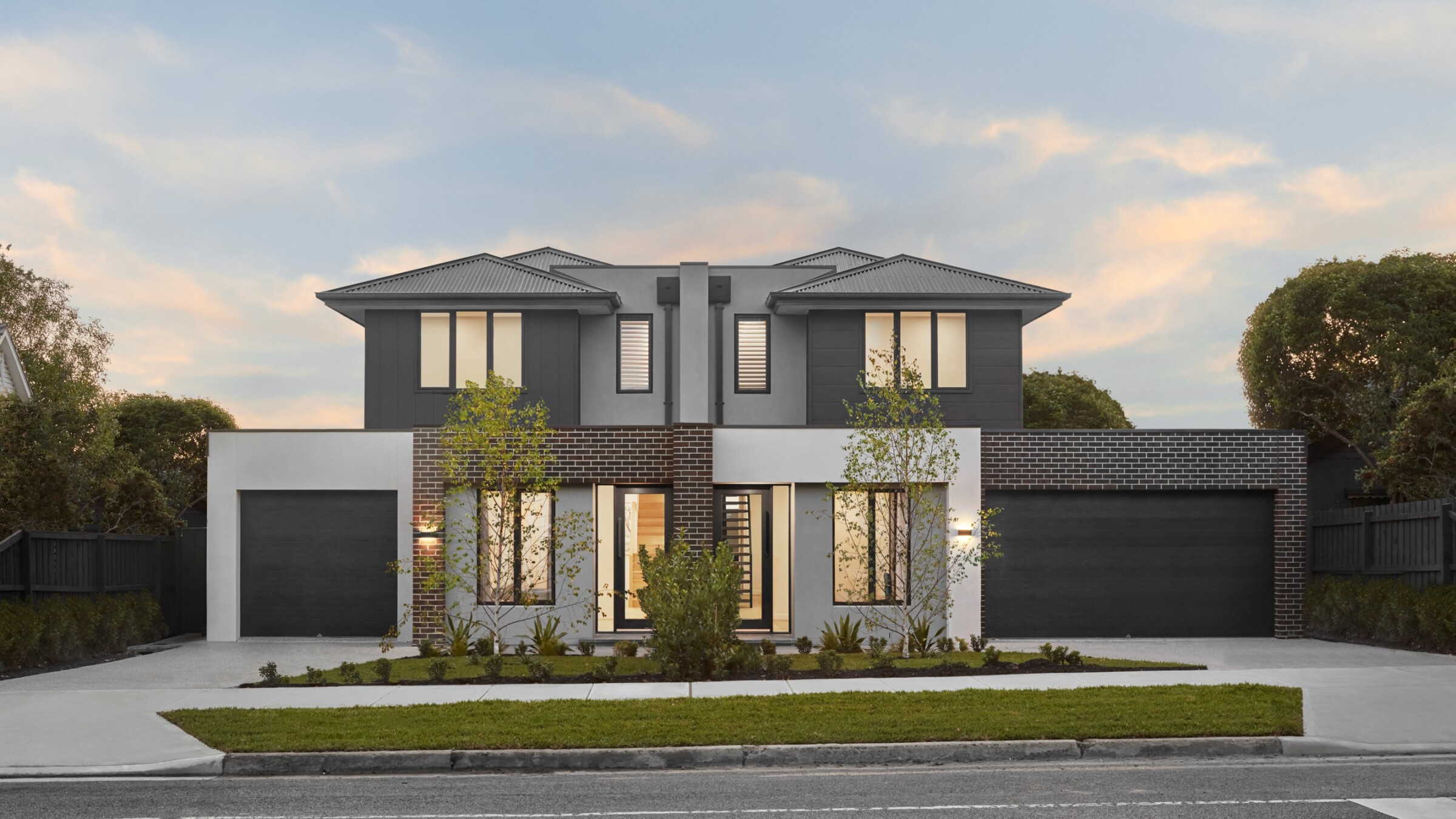
This page answers the most common dual occupancy questions — from what dual occupancy means through to feasibility, planning permits, costs and design considerations — drawing on the expertise of the Boutique Homes team and our experience delivering dual occupancy and duplex projects across Melbourne.
Whether you’re exploring dual living for family members, considering opportunities for potential rental income, or assessing the development potential of your existing property, you’ll find clear, practical guidance grounded in Victorian planning requirements and local council considerations.
Our specialist team delivers end-to-end support, from site assessment to construction, ensuring planning-aware designs, premium inclusions, and flexible living options for owner-occupiers, investors, and multi-generational households across Melbourne and regional Victoria.
Flexible Dual Occupancy Configurations
- Side-by-side duplex – Separate homes on one block, ideal for families or investors.
- Double-storey dwellings – Maximises privacy and land utilisation.
- Front-to-back detached homes – Perfect for narrower lots or investment potential.
All designs are architecturally inspired, compliant with Victorian regulations, and include premium inclusions as standard.
Why Build Dual Occupancy with Boutique Homes
- End-to-end guidance: Feasibility, planning approvals, demolition coordination, and construction.
- Planning-aware designs: Optimised for council compliance and block suitability.
- Premium inclusions: Fixtures and finishes selected for lifestyle and investment outcomes.
- Quality assurance: Backed by a 25-year structural guarantee and 12-month service warranty.
Book a complementary site assessment or visit one of our display homes
Who Dual Occupancy Works For
Dual occupancy homes from Boutique Homes suit a variety of lifestyles and investment goals across Melbourne and regional Victoria:
- Investors: Generate two rental incomes from one block.
- Owner‑occupiers: Live in one home while renting or selling the other.
- Families & friends: Co-build separate homes on the same land.
- Downsizers & land‑maximisers: Right-size your home while unlocking land value.
- Retirement planners: Create rental income to support long-term financial goals.
Our planning-aware designs and expert project guidance ensure each configuration suits your block, lifestyle, and long-term plans. Explore the full range of dual occupancy designs to see which layouts work best for your land.
Frequently Asked Questions
Boutique Homes answers the key questions about building dual occupancy or duplex homes — from feasibility and planning to design, timelines, and ownership — so you can explore your options with confidence and clarity.
Definitions
What is dual occupancy?
Dual occupancy means two dwellings on a single lot. In Victoria, a dual occupancy home can take several forms: a side by side duplex where two homes share a common wall, a double-storey development with living areas arranged across levels, or a front-to-back detached dual occupancy with two separate dwellings positioned one behind the other on the same block.
The key characteristics that define dual occupancy are exactly two dwellings – not more – on one block of land, which affects planning controls, permit pathways and building standards.
What is the difference between a duplex and a dual occupancy?
A duplex is a type of dual occupancy where two dwellings share a wall or structural element, usually side-by-side and has separate titles for each dwelling. Dual occupancy is the broader term – it covers both attached and detached configurations, whether the homes sit side by side or front to back on the same lot. The distinction lies in layout, council approval requirements and resale. For a detailed comparison, see our Duplex vs Dual Occupancy Melbourne guide.
What is a secondary dwelling and how is it different from dual occupancy?
A secondary dwelling – often called a granny flat or Dependent Person’s Unit – is a smaller home ancillary to the primary dwelling on the same property. Secondary dwellings are smaller than dual occupancy homes and typically face stricter limits on floor area, building height and setbacks. Granny flats cannot be sold separately from the main house and generally cannot be subdivided into separate titles.
Feasibility & Block Suitability
Can I build a duplex on my land?
Yes – building a duplex on your land is possible depending on several site-specific factors. Zoning rules dictate where dual occupancy can be built, so your block’s zoning classification is the starting point. Beyond property zoning, feasibility depends on. Book a site assessment to find out what your single block allows.
Can I build a second dwelling on my property?
Most Victorian residential zones allow a second dwelling on your existing property, either as dual occupancy (two full dwellings) or as a secondary dwelling such as a granny flat. Which path applies depends on your goals: whether you want to live in both homes, house family members, earn rental income, or eventually have the dwellings sold separately. Block size, local council planning controls and your development objectives all shape the right approach. Some councils allow secondary dwellings on smaller lots under tighter constraints, while dual occupancy may require larger minimum land area and additional planning approval. The right option depends on your block, council requirements, and intended purpose — whether to live, rent, or sell. Learn more.
What size block do I need for dual occupancy in Victoria?
There is no single minimum lot size for dual occupancy across Victoria – requirements vary by municipality, zoning and configuration. Side-by-side double-storey homes require a wider frontage, while front-to-back detached homes suit deeper, narrower lots. Other considerations include slope, easements, and setbacks. Boutique Homes provides expert guidance on the ideal layout for your block.
Planning & Permits
Do I need a planning permit for dual occupancy in Victoria?
Yes. A dual occupancy build in Victoria requires both a planning permit and a building permit. The planning permit assesses compliance with the Victorian Planning Scheme – covering zoning requirements, overlays, setbacks, building height, site coverage, private open space and neighbourhood character under planning codes such as ResCode. The building permit separately ensures construction meets Building Code of Australia standards for structural safety, drainage and fire compliance. Construction of dual occupancy is subject to local council planning controls, and a Development Application (DA) is required for dual occupancy. Planning approvals may come with several conditions, and building works approval is needed for construction activities.
What is VicSmart and how does it help dual occupancy applications?
VicSmart is a fast-track planning process for eligible dual occupancy developments, reducing council approval times and holding costs. Under Amendment VC288, which took effect on 16 October 2025, certain dual occupancy proposals, two dwellings on one lot in eligible residential zones (excluding Low Density Residential Zones) can use VicSmart if they meet all relevant planning controls and are not affected by conflicting overlays. Boutique Homes identifies eligible projects and manages submissions. Read more.
Process & Timeline
How does dual occupancy work?
Dual occupancy involves feasibility assessment, property zoning, design selection, planning approvals, demolition if required, construction, and handover. Boutique Homes manages all stages to ensure compliance, quality, and a smooth build process. Learn more.
How long does a dual occupancy build take from start to finish?
Timelines vary depending on planning approvals, site conditions, and demolition requirements. From initial assessment to handover, a typical project can take several months. VicSmart can compress approval times to 10 business days. Boutique Homes manages each phase to minimise delays and keep your project on track.
Ownership & Subdivision
Can dual occupancy be sold separately?
Yes – dual occupancy dwellings can be sold separately in Victoria, provided the property is subdivided into two separate titles. Without subdivision, dual occupancy homes share a single title and cannot be subdivided for individual sale under single ownership. Dual occupancy properties can be sold separately with council approval.
Can I be an owner-builder for a dual occupancy in Victoria?
Owner-building is possible in most cases but requires compliance with Victorian Building Authority requirements, planning conditions, and warranty insurance. Boutique Homes recommends professional project management to protect quality and guarantee coverage.
Cost
How much does a dual occupancy cost to build in Melbourne?
The cost of a dual occupancy build in Melbourne varies significantly based on several factors: whether the design is an attached dual or detached dual occupancy configuration, how independent the two homes need to be, such as with separate entrances and more self-contained living spaces, site conditions including demolition and slope, planning and permit fees, connection of services, interior finishes, council area, and any subdivision or titling costs.
Design & Display
What dual occupancy designs does Boutique Homes offer?
Boutique Homes offers side-by-side duplex, single-storey, double-storey, and front-to-back detached homes. Named designs include Collins, Bourke, Franklin and Swanston. View all dual occupancy designs.
Can I see a Boutique Homes dual occupancy display home?
Yes – Boutique Homes operates a dual occupancy display home in Melbourne, available to visit by appointment, including our Collins 31 & 30 Bentleigh dual occupancy display. Viewing a display lets you experience the finishes, layout and living areas in person, giving you a clear sense of scale, natural light and material quality before committing to your own dual occupancy build. Book a display visit to see out dual occupancy display and speak with our team about your project.
Additional Considerations
What are common dual occupancy layouts?
Common layouts include attached (duplex), detached, and tandem arrangements. Each layout is chosen based on block shape, size, and council requirements to suit your lifestyle or investment goals.
Can I subdivide the block after building?
Yes, subdivision can be applied for after construction, subject to council approvals. Boutique Homes can guide you through the subdivision process for flexibility in selling or renting dwellings.
Do dual occupancy homes require separate utilities?
Typically, each dwelling has separate connections for electricity, water, and gas. Boutique Homes coordinates utility requirements during planning to ensure compliance and convenience.
Can dual occupancy designs be customised?
Boutique Homes offers a curated range of designs with flexible layouts and façade options. While not fully custom, designs can be adapted within planning and compliance constraints.
Are dual occupancy homes investment-friendly?
Yes. They can generate rental income, increase land utilisation, and offer long-term flexibility for resale or owner-occupation, making them a sound investment choice.
What guarantees come with dual occupancy homes?
Boutique Homes provides a 25-year structural guarantee and a 12-month service warranty, ensuring quality, durability, and peace of mind for all dual occupancy builds.
Can dual occupancy homes be built in regional Victoria?
Yes. Boutique Homes designs and builds dual occupancy homes across Melbourne, Geelong, and regional Victoria, ensuring planning compliance and quality construction in all locations.
Do I need a display home visit before booking?
No, but visiting a dual occupancy display home can help you visualise layouts, finishes, and space, giving clarity before starting the build process.
How do I start a dual occupancy project?
Start by booking a complimentary site assessment with Boutique Homes. Our team evaluates your block, discusses suitable designs, and guides you through planning, approvals, and construction.
Can I combine dual occupancy with knockdown-rebuild projects?
Yes. Boutique Homes can integrate dual occupancy designs into knockdown-rebuild projects where permitted, ensuring full planning compliance and optimised layouts for the site.